Why Contractors Should Run Facebook Ads Alongside Google Ads
Google Ads still brings stronger buying intent. Our early results show Meta can add leads for less than half the cost. Here is why we recommend running both, and what Meta still has to prove.
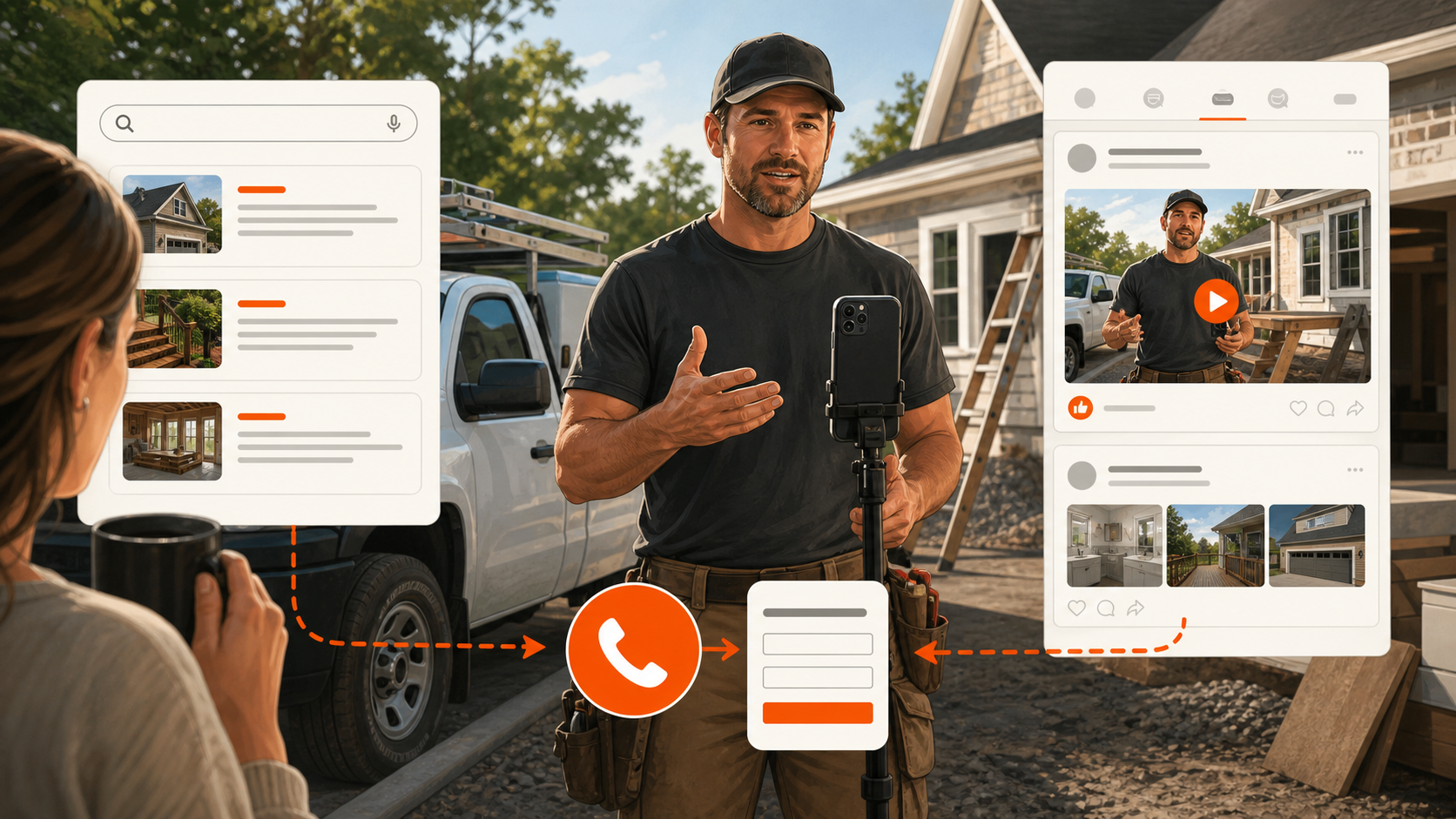
Google Ads Still Capture The Highest-Intent Demand
Someone types "tree removal near me" because a tree is leaning toward the house. A property owner searches for "land clearing company" because a project is already being planned. They have a problem, they know they need help, and they are looking for a contractor.
That is why Google Ads work so well for contractors. Google puts your company in front of people at the moment they are searching for the service you sell.
That intent comes at a price. Google Ads leads cost more than Meta leads in the accounts where we are currently running both platforms. We do not consider that a problem. A lead from somebody who is actively trying to hire a contractor should be worth more than a casual click.
Meta reaches people at a different point. They are scrolling Facebook or Instagram, not searching for a contractor. Your ad has to get their attention, establish some trust, and give them a reason to act.
Google captures existing demand. Meta helps create and collect demand earlier.
That distinction is why we do not see Facebook Ads as a replacement for Google Ads. The two platforms do different jobs.
Our Early Meta Leads Cost Less Than Half As Much
We recently started managing Facebook and Meta Ads for contractor clients. The early cost-per-lead numbers have been encouraging.
In the accounts where we can compare both platforms, Meta lead costs are currently running below half of Google Ads lead costs.
This is early first-party agency data, not a broad study of the contracting industry. We are sharing the direction of the results because it is what we have actually seen, but we are not pretending it proves how Meta will perform for every contractor.
We also do not have enough downstream data yet to make firm claims about close rate, average job size, or final return on ad spend. Those numbers take longer to establish.
What we can say is simple: Meta has produced leads at less than half the cost of Google in the accounts where we are running both.
That is enough to take the channel seriously. It is not enough to stop measuring what happens after the lead comes in.
Cost Per Lead Is Only The First Number
A lower-cost lead is not automatically a more profitable lead.
Cost per lead tells you what it cost to generate a call or form submission. It does not tell you whether the customer answered the return call, scheduled an estimate, accepted the quote, or hired the company.
Google leads generally appear to have stronger intent because the customer went looking for the service. They may have a hazardous tree, a leaking roof, an overgrown property, or another problem they already want solved.
A Meta lead may be earlier in the process. The customer was not necessarily searching. Your video caught their attention and reminded them about work they had been considering. That can still become a good job, but the path may be different.
We do not have enough data yet to tell you exactly how much different. We are tracking it instead of filling the gap with a confident guess.
Contractors should eventually compare each platform using several numbers:
- Total calls and form submissions
- Qualified lead rate
- Estimate rate
- Close rate
- Average sold job value
- Cost per sold job
- Revenue attributed to the campaign
That is how you learn whether the lower-cost leads are producing profitable work. Lead cost is useful, but incomplete.
Creative Has Been The Biggest Variable
The strongest lesson from our early Meta campaigns has not been about targeting. It has been about creative.
Video has far outperformed static photos for us so far. More specifically, videos featuring the business owner have performed well because they let a potential customer see and hear the person behind the company.
That matters in contracting. A homeowner may be inviting a crew onto their property, trusting someone around their house, or handing over thousands of dollars for work they do not fully understand. A logo and a photo of a truck do not answer the biggest question in their mind: "Who am I dealing with?"
An owner speaking directly to the camera starts answering that question before the customer calls.
The video does not need to look like a television commercial. It needs to feel real. Show your face. Explain what your company does. Show real work, real equipment, and real employees. Give people a quick sense of how you communicate.
Creative is not the decoration around a Meta campaign. It is the part that earns the lead.
Broad Brand Videos Are Working Without Complicated Ad Groups
We have not built a large set of Meta ad groups around individual services. Our current approach is much simpler.
Each client has a couple of overall brand videos that explain the company and the work it handles. A tree service might mention removals, trimming, storm cleanup, and stump grinding in the same video. A land management company might discuss clearing, grading, forestry mulching, and related work.
The goal is not to explain every service in detail. The goal is to introduce the company, show the owner, establish familiarity, and give the right person a reason to click.
After the click, the customer reaches a landing page with two options: call the company or submit a form. Some people want to speak with someone immediately. Others would rather send their information and wait for a callback. Giving them both choices removes an unnecessary barrier.
This approach has kept the campaign straightforward while we gather enough data to decide where more specific service campaigns may make sense.
Complicated campaign structure cannot rescue weak creative. A clear video and a useful landing page give the campaign a better starting point.
A Contractor Can Film A Useful Ad With A Phone
The business owner needs to be willing to get on camera. That may feel uncomfortable at first, but it is one of the clearest ways to build trust on Meta.
You do not need a production crew. Start with a phone, decent light, a quiet location, and a simple outline.
Use this structure:
- Say who you are and where you work.
- Explain the main types of work your company handles.
- Show real footage from jobs, equipment, or the crew.
- Explain what a customer can expect after contacting you.
- Ask the viewer to call or request an estimate.
Do not memorize a long script. Know the point you want to make, then explain it the way you would to a customer standing in the driveway.
The first few seconds matter. Open with your face and a clear statement. For example:
"I am Connor with Example Tree Service. We help homeowners across Wake County with tree removal, pruning, storm cleanup, and stump grinding."
From there, cut to real footage while you continue talking. Show the crew setting up a work zone, lowering a limb, cleaning the property, or loading equipment. Real work gives the customer something concrete to judge.
Keep the message focused. One useful minute will usually do more than three minutes of background about the company.
The goal is not to look like an actor. The goal is to let the customer meet you before they call.
Meta Requires Fast Follow-Up
Lower intent does not mean bad intent. It does mean the lead may cool off faster.
A Google lead searched for your service and may call several companies immediately. A Meta lead may have acted because the video caught them at the right moment. If nobody responds until the next day, that moment may be gone.
Contractors running Meta Ads need a clear follow-up process. Calls should be answered when possible. Form submissions should trigger a quick call, text, or both. The person handling the lead should know which campaign it came from and what the customer saw.
Tracking should also separate Google and Meta leads. You need to know which platform generated the inquiry if you want to compare qualified leads, estimates, sold jobs, and revenue later.
Meta can lower the cost of creating an opportunity. Your sales and follow-up process still determines what happens to it.
Contractors Should Run Meta And Google Together
Our opinion based on the results so far is straightforward. Contractors should consider Meta Ads as a supplement to Google Ads, not as a replacement.
Keep Google running to reach people who are actively searching and ready to hire. Add Meta to reach more people, build familiarity with owner-led video, and create another source of leads at a lower cost.
Then measure the platforms separately. Watch cost per lead now. Add qualified lead rate, estimate rate, close rate, job value, and cost per sold job as the data develops.
The early Meta results are good. Lead costs are running below half of Google Ads lead costs in the accounts where we can compare both. We are encouraged by that, but we still want the longer-term results before making bigger claims.
That is how contractors should approach the channel too. Test it with real video. Follow up quickly. Keep Google running. Judge the campaign by sold work, not a cheap lead screenshot.
If you want help planning, filming, running, and tracking the campaign, talk with us about Meta Ads Management.
Sources And Notes
- 22 Local Marketing first-party campaign data, reviewed August 12, 2026.
- Campaign observations and strategic opinions were provided by Connor Dann, Founder of 22 Local Marketing.
- The results are early and should not be treated as an industry-wide performance benchmark.
Want this kind of work for your business?
22 Local Marketing builds the marketing engine for serious home service companies. Websites, SEO, Google Ads, and reporting tied to revenue. If anything you just read sounded like a problem you have, let's talk.
Get a free strategy call →